Gastric Cancer – Part 1
Read how Doctor and researcher Eleazar Montalvan climbs many mountains in search of gastric cancer patients and stories. (Oct. 2016)
Read how Doctor and researcher Eleazar Montalvan climbs many mountains in search of gastric cancer patients and stories. (Oct. 2016)
Since beginning her research with the Western Gastric Cancer Initiative, Dr. Daniela Montalván has been witness to much, including despair and inspiration. Read her story. (Oct. 2016)
Dr. Aida Rodríguez shares her excitement and her journey to find a gastric cancer patient, who beat the odds. (Oct. 2016).
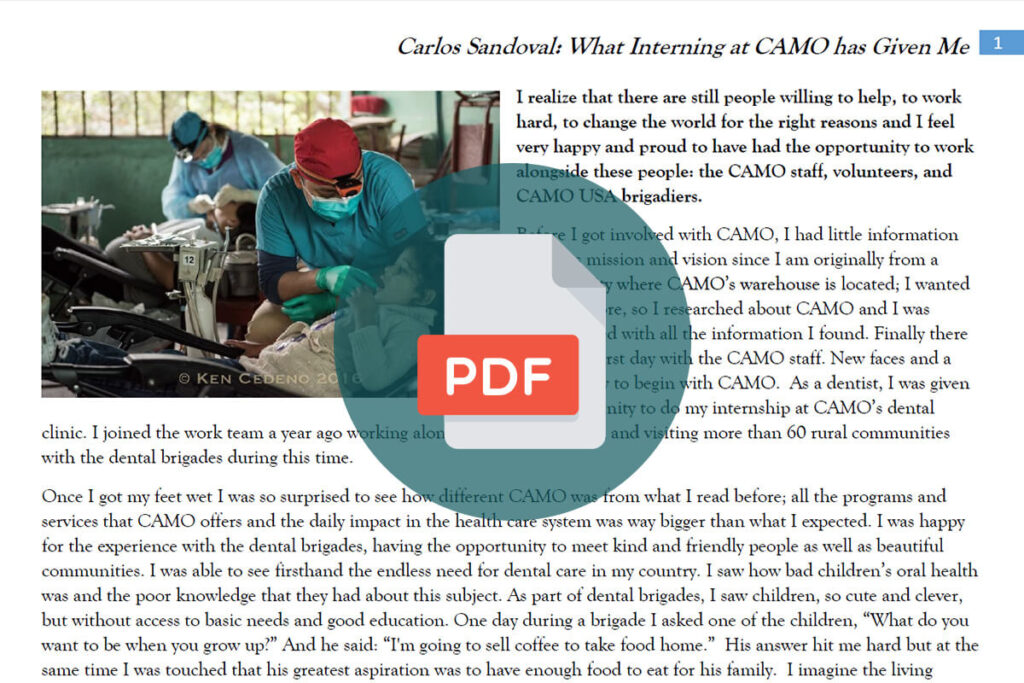
I realize that there are still people willing to help, to work hard, to change the world for the right reasons and I feel very happy and proud to have had the opportunity to work alongside these people: the CAMO staff, volunteers, and CAMO USA brigadiers.
Read more as Carlos Sandoval, an intern who worked with CAMO’s dental brigades, describes the gifts he has seen as part of the CAMO team in Honduras.
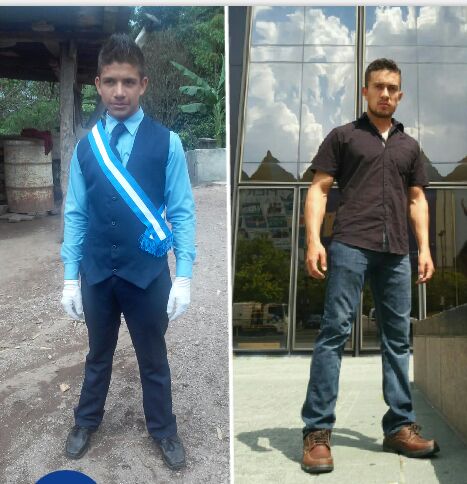
Rosa Lia, disheartened by the condition of her two sons in 2006 and 2007 sought help. Yixon, 12 years old, and his brother Geyner, 8 years old, were born with club feet, not allowing them to wear shoes or work on the modest farm with their father. Dr. Dona Alvarez, our CAMO counterpart in orthopedic surgery from Oakland Maryland, performed corrective surgery to straighten their club feet. Recently, Rosa Lia came to our office in Honduras and was indescribably grateful for the surgical procedures provided by CAMO and proud of her two boys. Now 11 years later, their mother wanted us to see these photos of her sons. Yixon resides in the US. Geyner, his younger brother, finished high school through a special program providing high school-level courses to rural communities. “CAMO helped us so much because my children could not wear shoes before, but now, they don’t have any problems. We were blessed by this medical brigade.” She added, “CAMO has changed our lives forever.”
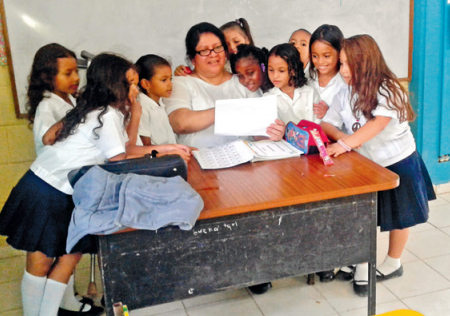
Ibeth, 58 years old, loved teaching, but in early 2017 she lost her leg and was given a prosthetic leg.
The director of the elementary school felt she could not do her job with a prosthetic limp and removed her from the classroom, giving her secretarial duties away from the children and environment she loved. With each day, her self-worth and confidence fell, until she reached out to CAMO’s prosthetic lab for help this October. After ensuring the physical fit of the limb was good, Mark Gorman (counterpart of the prosthetic lab since 1997) began to address the emotional fit. From his years of experience, he was able to give advice and train his Honduras counterpart, prosthetic technologist Carlos Cortez, on many new but daily situations Ibeth faced: how to confront the overt biases from the director of the school and community and, more importantly, how to reclaim her self-confidence. He suggested dancing—it trains the body in balance and natural movement. Mark and Carlos encouraged her to dance with her son and we have received reports she is dancing —and has gained confidence in her movements. She is back as a teacher. A life changer!
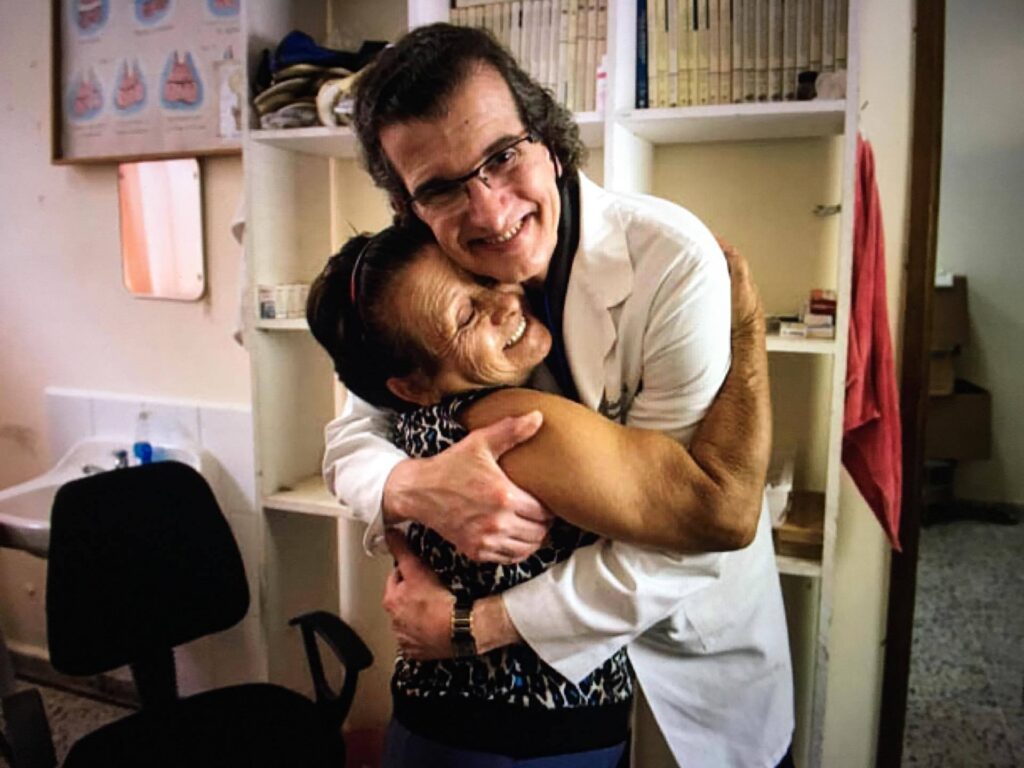
Doña Berta began her 4-hour walk at 3am just to reach the CAMO Neurosurgery Team. But Doña Berta was not hoping for a miracle; she was hoping to thank the neurosurgeons for giving her a miracle healing. At the CAMO office, Honduras Executive Director Jose Bautista (with his usual gentle spirit) asked Doña Berta if she was a family member of one of the patients. “No,” she replied. “I was a patient last year. I just came to say thank you.” Jose barely kept up with Doña Berta as they walked to the place where the neurosurgery team was screening patients. When she saw Dr. JC Tabet, Dr. Roberto Alvarez, Ed Rhodes, Mary Harris, Marlene Bennett and Deb Sorge, she could no longer contain herself. Doña Berta jumped into Dr. JC Tabet’s arms. For twenty years, she suffered with pain. Today she is painfree! For doctors and nurses, the gift of gratitude is the most memorable gift of all. CAMO sees patients who come from humble living conditions, who work 12- hour days making an average of $2.50 a day, and who walk for miles with the hope of being helped. But it is impossible even for a hard-working family to afford surgery which requires more than $50,000 worth of instrumentation and appliances. This year, some of the cases were devastating for the team to see, beyond anyone’s capacity to comprehend in Honduras (including CAMO’s). For instance, the lack of resources would condemn a 22-yearold mother to impending paralysis and eventual life support systems due to a vascular tumor in her neck. So, the CAMO teams are faced with hard decisions. Twenty-five consults are preselected, and then only 12 patients hoping to regain mobility and freedom from pain are selected for surgery. Some people could wait until next year, but others would not survive. These are the decisions faced by Honduran Dr. Robert Alvarez and his USA counterpart, Dr. JC Tabet. Don José was one of the lucky ones. Five days after having major back surgery, Don José walked out of the hospital, relieved from his previous pain. The smile on his wife’s face shows the impact this surgery will have on his and his family’s life. It is not possible in one team week to help everyone who is in need, but CAMO is grateful for the opportunity and the means to help 12 people. And CAMO is grateful for the medical professionals who volunteer their own time and money to change people’s lives for the better. Their gratitude, like Doña Berta’s, is undeniable, and such gratitude is contagious.
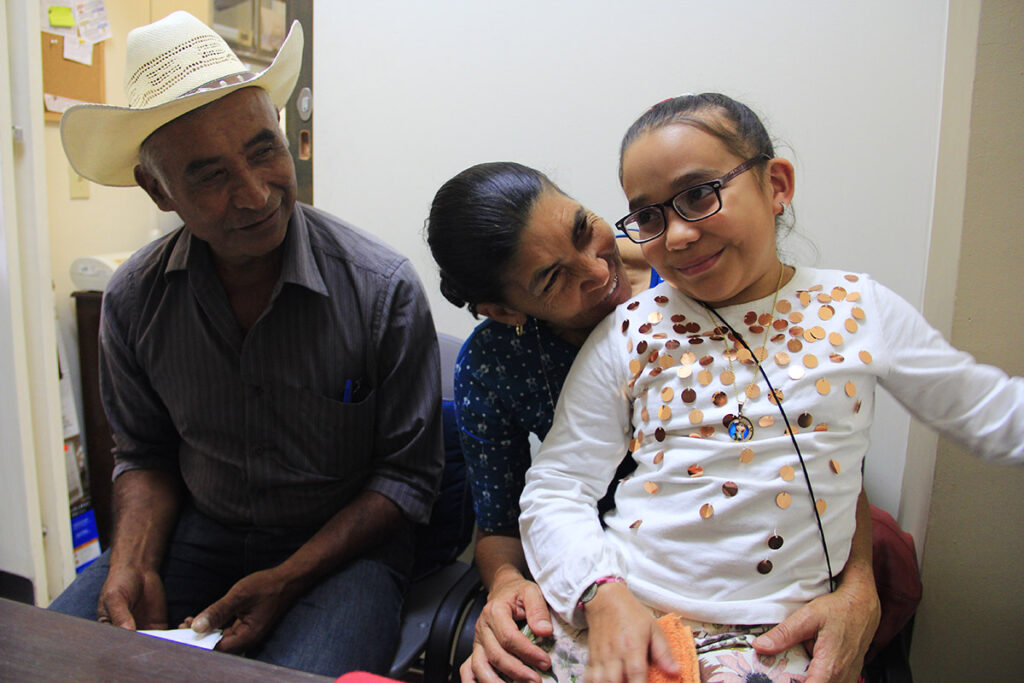
Not all days are filled with miraculous visits to CAMO, and not all of CAMO’s patients are happy on a daily basis. Often, they look worried, thoughtful or sad, depending on their personal situations. Their illnesses or economic problems reflect on their faces. But one day, we had an unexpected visit: a family. They looked happy, and they were not in a hurry like most patients who are afraid to miss the last public transportation ride home. This family wanted to talk. In 2015, their 10-year-old daughter, Mauri, started having some health problems. Her complications started with hepatitis, anemia and eventually developed into strong headaches and occasional fainting. Mauri had to be taken out of school. In fact, she became increasingly ill to a point that she could no longer tolerate her headaches without taking medicine. She even lost her sight at a surprisingly rapid rate. Dr. Roberto Alvarez evaluated her and immediately sent her to CAMO´s office. She had been diagnosed with pediatric craniopharyngioma (a type of brain tumor). Her surgery would cost about $12,765, but CAMO found a way to help Mauri without charging her family any money. Just six days after Dr. Alvarez performed the surgery and extracted the tumor, she began feeling much better. After the surgery, Mauri still had to undergo chemotherapy treatment to recover completely. Even though 2015 was a difficult year for the family, it was also a test on their faith.
They expressed their gratefulness toward CAMO because they still saw positive results even though they didn’t have the economic resources to cover all the expenses that come with food and traveling. Their daughter even recovered her sight and is back in second grade again.But this time, she won´t miss it. In fact, she is anxious for third grade to begin. Dr. Roberto Alvarez sees Mauri every 3 months for follow-up check-ups, and she remains cancer free!
ORRVILLE — It’s difficult — especially in health care — to enforce policies and procedures when there’s no manual detailing what those policies and procedures might be.
Nearly 40 years ago, three Peace Corps nurses worked for two years to craft just such a manual for nurses working in Honduras. Without the benefit of 2018 technology, the pages had to be run on an old copier, then taken by bus to a bindery.
And even with all that work, only 20 copies were produced — one for each hospital in that Central American country.
All these years later, there are, not surprisingly, not too many of the original 20 left.
And that is where the Orrville-based Central American Medical Outreach came in.
Before, ”(procedures) were by word of mouth,” said CAMO founder and international director Kathy Tschiegg, who was one of those three nurses who created the original manual. “It was the telephone game. It wasn’t right that teaching had gone from mouth to mouth to mouth, instead of by scientific principles.”
And six years ago, realizing that copies were in short supply and procedures needed to be reviewed and updated, Tschiegg spirited away a single copy and had it digitized.
But this time, it was the Hondurans who went to work.
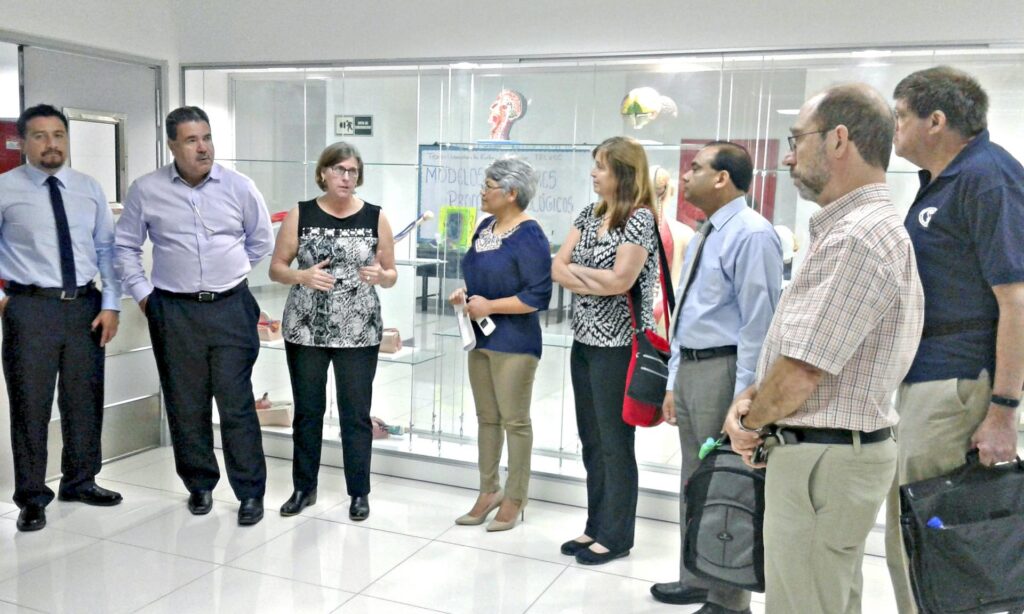
Grant funding made it possible for four nurses and a public health doctor to come from Honduras and work with four nursing instructors from the Aultman College of Nursing in Canton to update the manual for wider distribution to the country’s hospitals and universities.
The manual, which is written in Spanish, goes procedure by procedure, gives the objective of each, followed by step-by-step instructions and notes, even for something as simple as putting on gloves.
But completing the manual, Tschiegg said, was just a first step.
For three years, Tschiegg and the manual’s supporters would meet with the Honduran Minister of Health, a position similar to that of the U.S. Surgeon General. And each of those years, the group would try to convince the minister and vice ministers to make the manual the standard for all Honduran hospitals.
While each of the ministers was interested in having copies for their own hospitals, getting an agreement for all the hospitals was too much of a hurdle. “These are the struggles you find in a developing country,” said Tschiegg, who believes the ministry balked at having the responsibility for across-the-board standards. “It’s a balancing act.”
Undeterred, her group took a different approach. They went to the universities, armed with not only the manual, but a 14-day training curriculum based on it.
Implementation of that program began earlier this year at the most prestigious university in Honduras, while the country’s three Catholic colleges are reviewing it for use, as are some of the country’s private hospitals.
“We had our champions and we still have our champions with us together,” Tschiegg said. “It’s taken four years for us to get us where we are today.”
Making progress in developing countries can sometimes be slow going, but CAMO — which is celebrating its 25th year — continues to work. “You need,” Tschiegg said, “a long-term mission hammering away at the issues.”
Reporter Tami Mosser can be reached at 330-287-1655 or tmosser@the-daily-record.com.
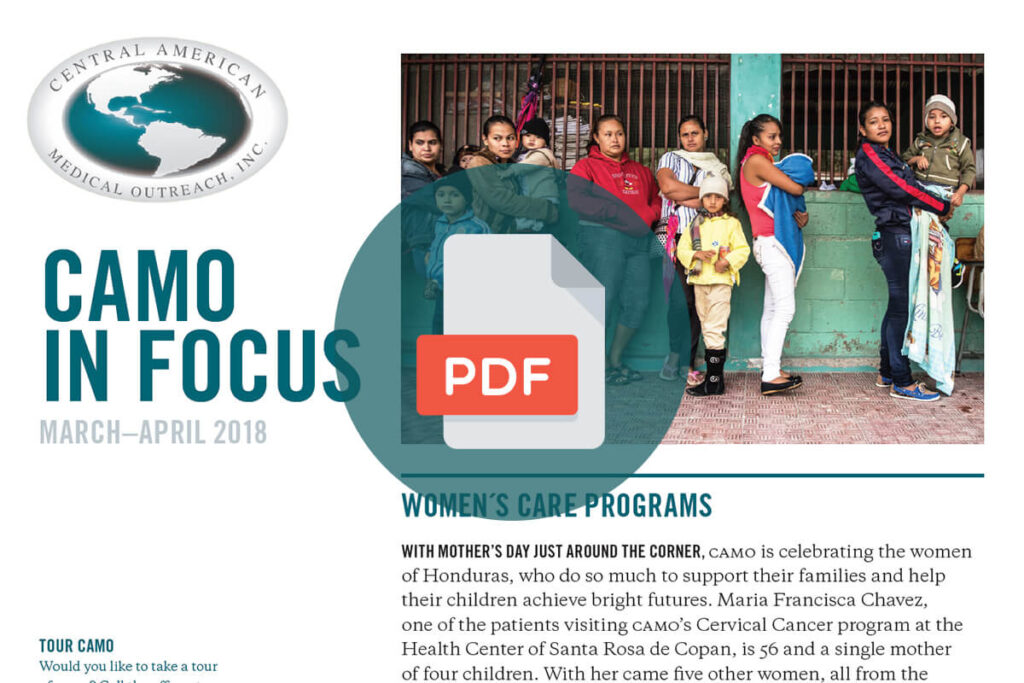
WITH MOTHER’S DAY JUST AROUND THE CORNER
CAMO is celebrating the women of Honduras, who do so much to support their families and help
their children achieve bright futures.