Registration now open for the 2026 Salsa Sizzle — Register Now!

Boletines

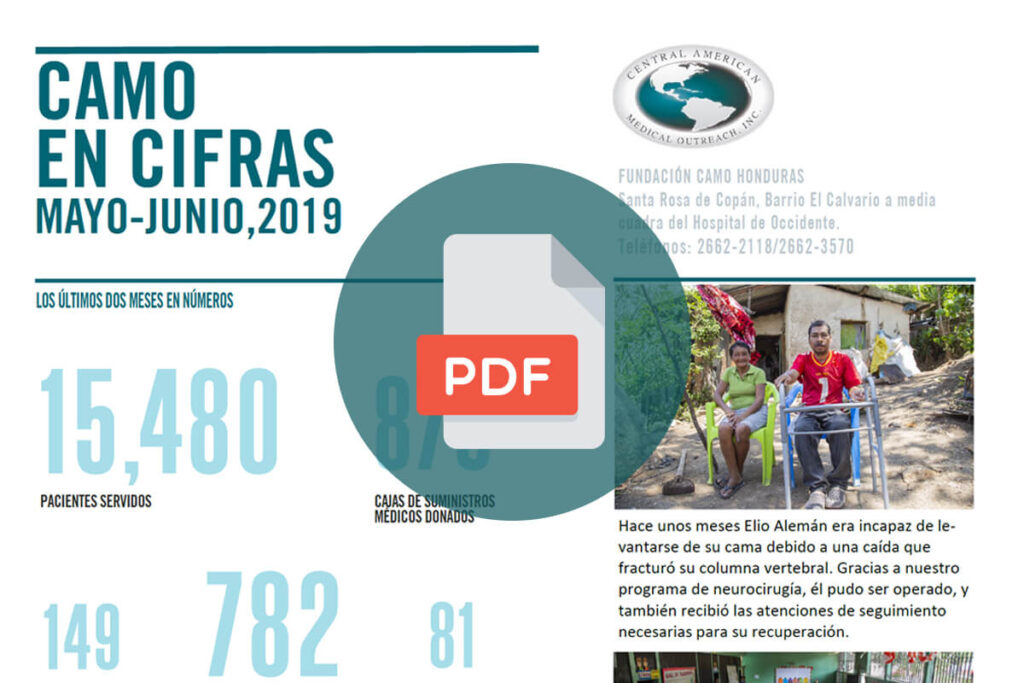
CAMO en línea, Mayo-Junio 2019

Nuestro impacto en cifras!

Si, a través de nuestros 18 programas de salud hemos mejorado la vida de 15,480 adultos y niños. Gracias por apoyar nuestra misión a través de sus donaciones, oraciones y voluntariado con nosotros.

News

Dedication to nursing care unites teams at Otterbein

Otterbein University’s nursing program is extending its reach beyond Westerville with the help of its Healthcare Education Simulation Station.

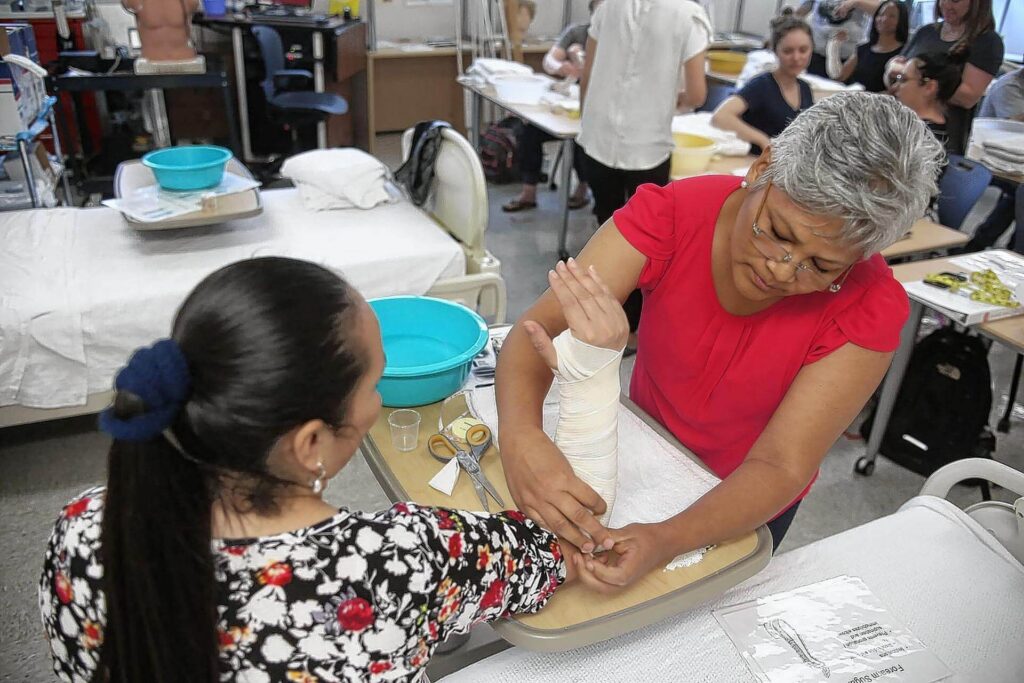
It recently provided a group of nurse educators from Honduras access to hands-on training and low-cost equipment to help train nurses and save lives in their own country.

Jeff Becker, chief maker at edgeThingZ, a product-realization hub at Otterbein, is partnering with Central American Medical Outreach to provide a low-cost classroom technology program in partnership with Otterbein’s nursing department, according to Jenny Hill, a university spokeswoman.

The university’s HESS offers an alternative approach to high-cost nursing-simulation equipment to benefit nursing education and nursing outcomes globally. The HESS system costs $49 per month to provide, compared to the $100,000 a high-tech training mannequin can cost and $1 million for a full-simulation center, according to Hill.

Central American Medical Outreach Inc. is a nonprofit that strengthens health-care systems and provides support for sustainable community development in central America, according to its website, camo.org.

The organization has a headquarters in Santa Rosa, Honduras, a city that is home to five universities. Services provided or supported by CAMO include a domestic-violence shelter, a community gym, a trade school, a daycare center, a cultural center, literacy programs, medical programs and research, and a public health center.

Kathy Tschiegg started the program outreach program in 1993 after the conclusion of her Peace Corps service in Honduras. She said she was devastated about the loss of 31 babies during her last month of service in the 1980s. The deaths were a result of not having the supplies, equipment and educated staff, she said. She said she returned in 1989 and found conditions were even worse than when she left in those terms.

“At that point, I started thinking about how I make a program to solve those problems,” she said.

Otterbein, CAMO and edgeThingZ teamed up to make the training available through the HESS system. The system uses various devices, such as a pulse oximeter and thermometer, that can simulate the required key vital signs for a variety of healthcare-simulation scenarios. The devices can be used with less expensive, low-fidelity mannequins and even human actors, according to the university’s website.

Becker said the technology is being used by nursing education programs at Ohio State University, Kent State University, Wittenberg University, Marion Technical College, Mercy Health and others, according to a university press release.

A group of four nurse educators from four universities were brought to Otterbein for training May 17-19. Ana Julia Melgar Martines,Thania Lineth Estinal Aguilar, Kenia Daliceyh Calderon and Teresa Maribel Carrillo Salgado are all nurse educators who were able to receive training in real-life scenarios with the HESS system.

“These seven days helped me to learn very much and it was very good with the nurses of the other universities. We have learned another way that is an economical way and will help us to elevate our scientific principles. It will help us in advancing the skills of our students,” Salgado said.

She also said it was a great experience to meet other nurses passionate about education.

Tschiegg said this training is life changing because of the reduction in cost.

Tschiegg said she’s hoping the HESS system and training can also be a chance for the country to move forward past poverty and crime.

“They want their country to be better,” Tschiegg said. “These doctors and nurses are passionate about what they do and they love their country,” she said. “I think that says a lot.”

Source: https://www.thisweeknews.com
Newsletters

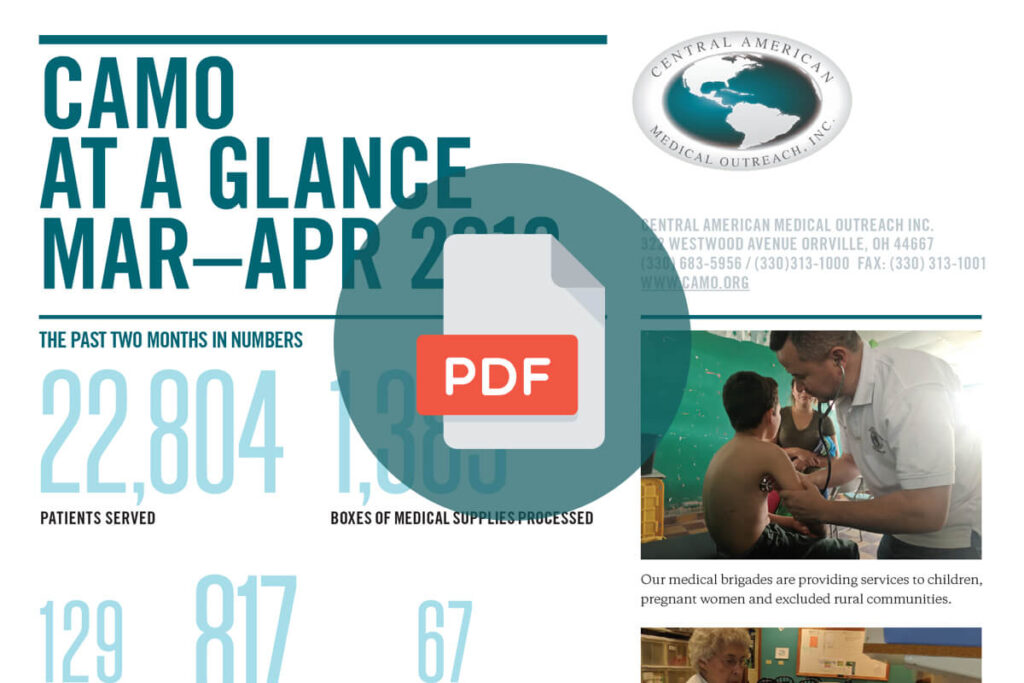
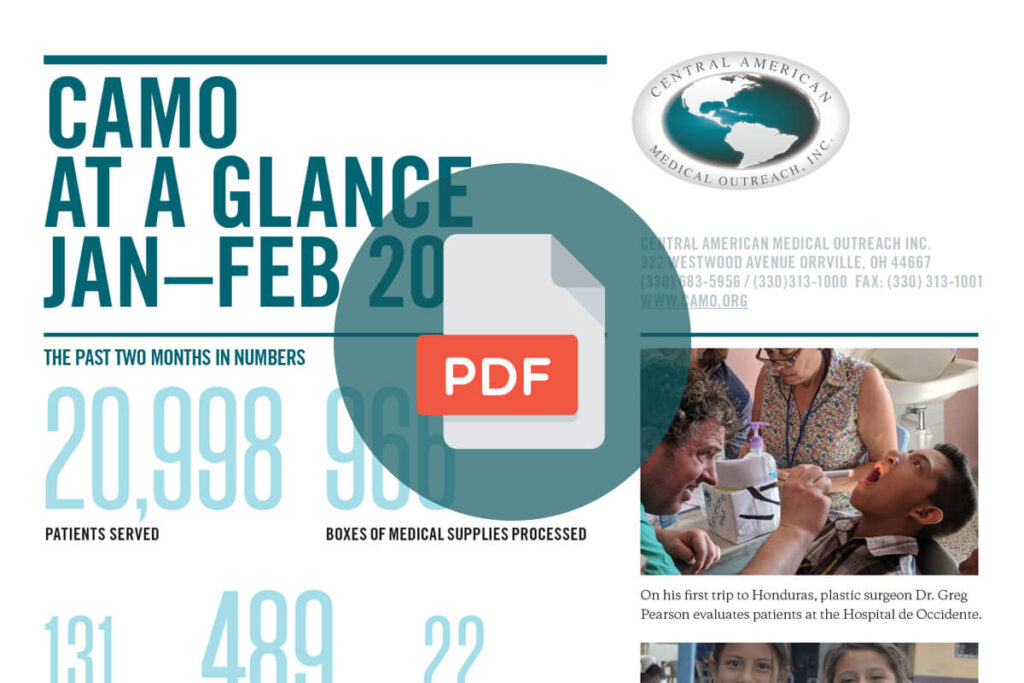
CAMO In Focus, March-April 2019

22,804 PATIENTS were served with our medical, educational and community development services these past months. And it was possible thanks to your support, time, talents and donations shared with us. Please take a look at our impact in numbers-and share our stories of hope.

Boletines

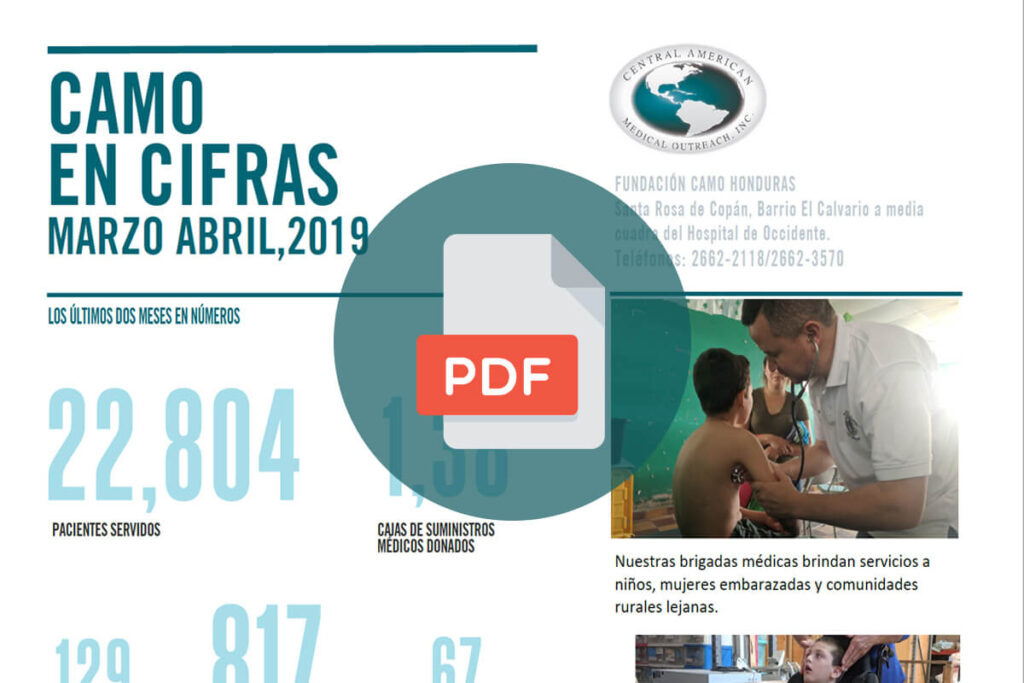
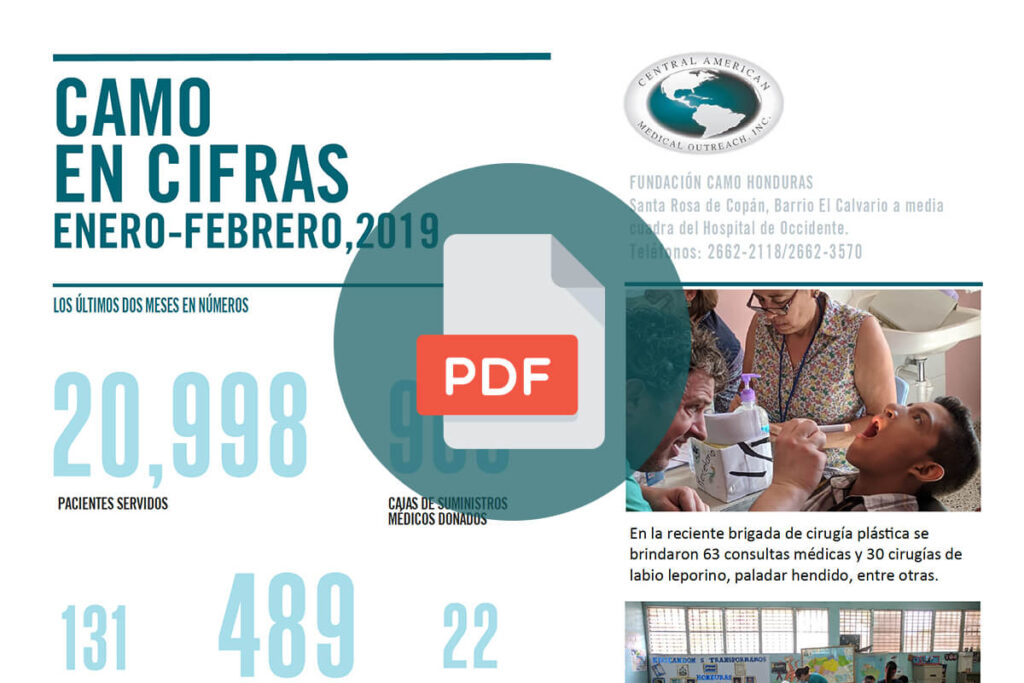
CAMO en línea, Marzo-Abril 2019

En los últimos meses, 22,804 PACIENTES recibieron servicios médicos, educativos y de desarrollo comunitario. Esto fue posible gracias a su ayuda económica, tiempo, talentos y donaciones compartidas con nosotros. Le invitamos a que le de un vistazo al boletín informativo y comparta con su familia y amigos el impacto de nuestros servicios.

Newsletters

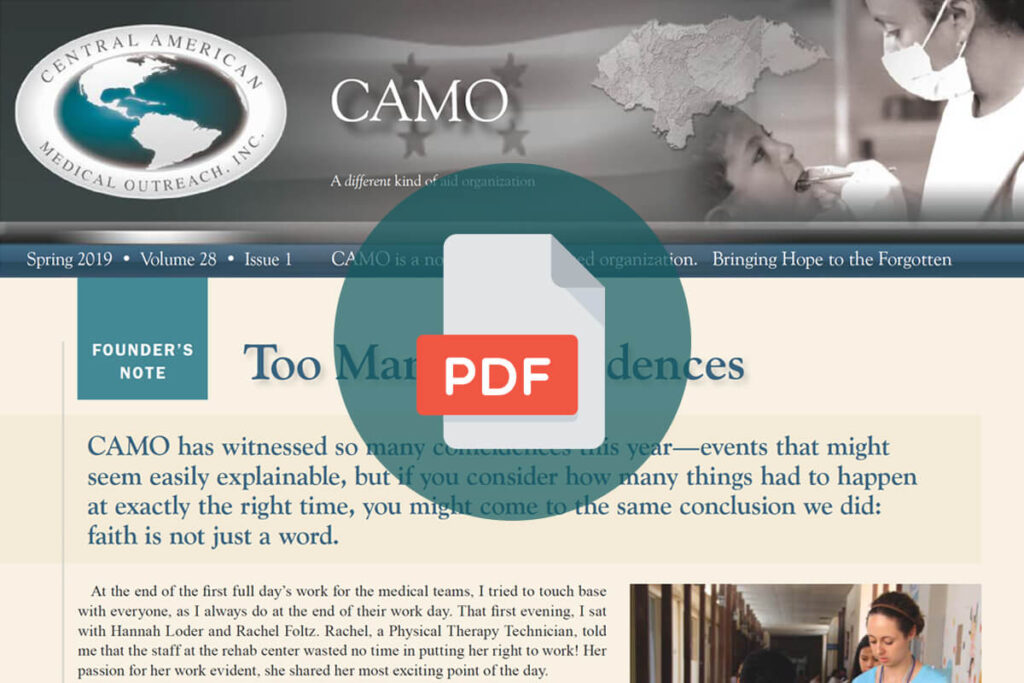
Spring 2019

Sometimes it is amazing to see what we can do just by having a “half walker”, a committed volunteer and a series of events that had to happen at the exact right time. Coincidences or not, the story that unfolds is music to our ears. Jose Antonio, a young man of forty-nine, had a stroke on the job and lost movement on his left side. Confined to a wheelchair, he had not walked since the day of his stroke three months prior.

Newsletters

CAMO In Focus, January-February 2019

MARIA FRANCIS IS BACK!

HER SMILE IS WORTH IT ALL. When seeing Maria Francis so happy, enjoying her mother´s dance, we know that we´ve done something right for her and her family. With six children in her family, she and her siblings haven´t had it easy: there is little food on their table and almost no money left over for clothing or transportation. Surgery to correct her cleft lip and palate deformity was simply an unreachable dream.

Boletines

CAMO en línea, Enero-Febrero 2019

¡MARIA FRANCIS HA REGRESADO!

Al ver a María Francis tan feliz, disfrutando del baile de su madre con uno de nuestros voluntarios de brigada, sabemos que hemos hecho algo bien para ella y su familia. Su vida y la de sus cinco hermanos no sido fácil: con poca comida en la mesa, sin dinero para ropa o transporte, una cirugía para corregir su labio leporino y la deformidad del paladar era simplemente un sueño inalcanzable.

News

Poorest of the Poor: Accidents, diabetes increase need for prosthetics in Honduras

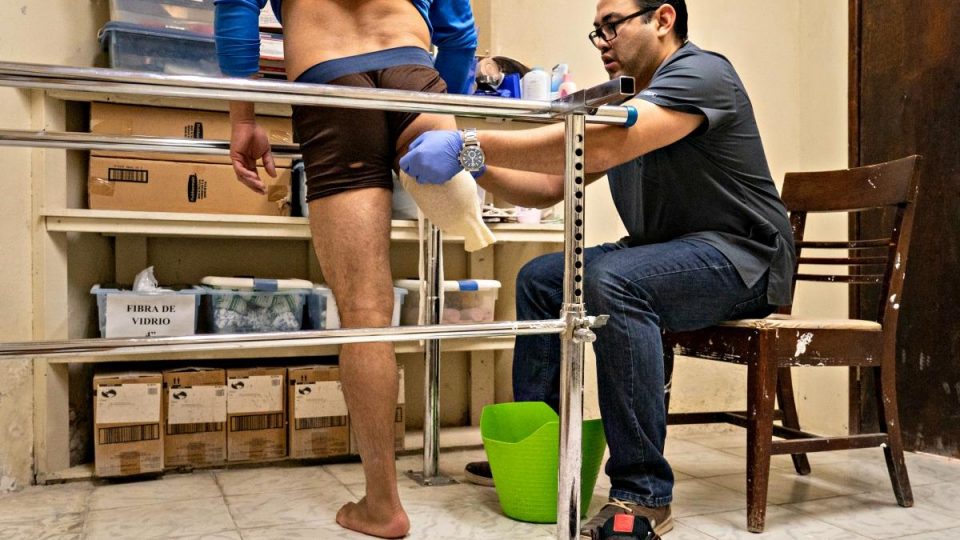
SANTA ROSA DE COPAN, HONDURAS — Mark Gorman is sitting in a small room, made smaller by the stacks of containers that line two walls. He is rummaging around, looking for just the right piece of strap to adapt a plastic boot that straps to the leg of a young man named Jose, who has had his foot amputated. The prosthetic, which Jose got earlier this week, doesn’t fit comfortably in his shoe. There are muscles that connect to the heel, Gorman explained, and muscles that connect to the forefoot…Source: www.the-daily-record.com

News

Poorest of the Poor: Honduran first responders getting training, equipment through CAMO

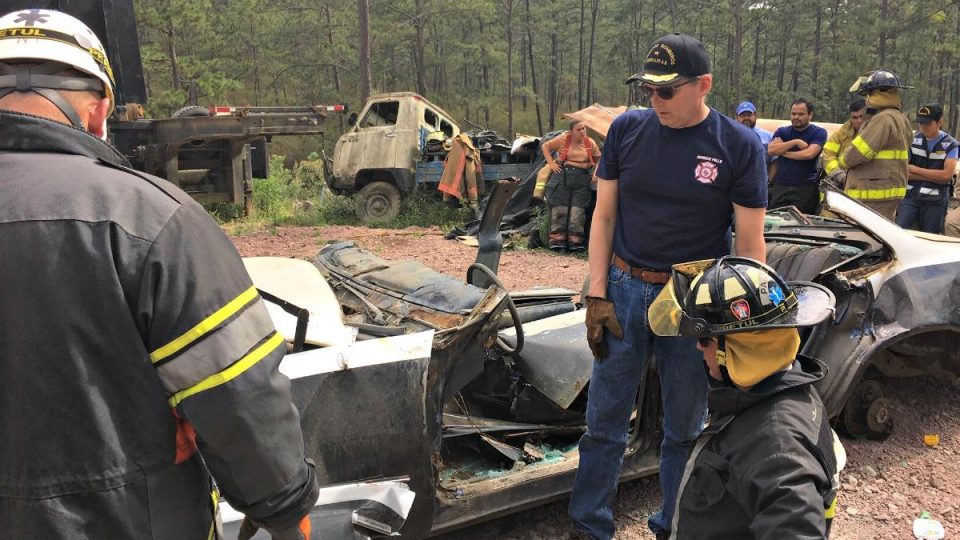
SANTA ROSA de COPAN, HONDURAS — There was a bus accident not too long ago on one of the main roads leading to Santa Rosa. This in and of itself is not unusual. The emergency department at Hospital de Occidente sees all manner of people — including children — from bus accidents, from car accidents, from falls from the beds of trucks, where it is not unusual for up to 10 people to be riding both sitting down and standing up. But, according to Hannah Loder, an EMT and emergency department nurses’ assistant currently living in Zanesville, what happened as a result of this particular accident would have been preventable, had the local fire department had the right equipment and the protocols to use it…Source: www.the-daily-record.com

Scroll to Top