CAMO en Línea Mayo_Junio_2024
CAMO EN LÍNEA 2024
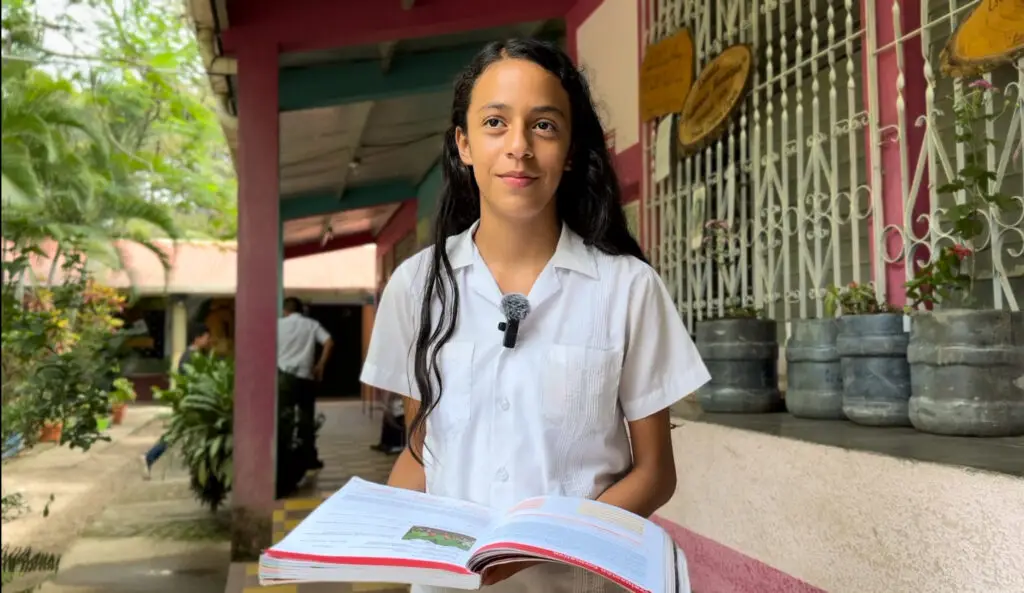
Nataly Marcela Mejía Pérez, estudiante de quinto grado en el Centro de Educación Básica Miguel Paz Barahona de Corquín, Copán, demostró ser una de las lectoras más rápidas y comprensivas de su escuela.
Este talento la llevó a ganar concursos de ortografía, convirtiéndose en una estudiante ejemplar.
Nataly, que está por cumplir 12 años el próximo 25 de julio, se destaca entre sus compañeros por su habilidad en lectura veloz y comprensión lectora.
El CEB Miguel Paz Barahona sigue un proceso de control de lectura, registrando la cantidad de palabras que los niños leen por minuto y evalúa su comprensión lectora, como parte de su proceso de aprendizaje.
Este método, implementado con el apoyo del Departamento de Educación y el programa de literatura de CAMO, dota a 17 centros educativos del occidente de Honduras con libros educativos y de lectura.
Adicionalmente, el Programa de Educación y Salud Integral (PESI) evalúa a los niños en oftalmología, nutrición, odontología, higiene bucal y audiometría, identificando y atendiendo tempranamente posibles problemas de salud que pudieran afectar su aprendizaje.
Gracias a este programa, Nataly ha podido desarrollar sus habilidades lectoras.
Su preparación la llevó a ganar el primer lugar en un concurso de ortografía a nivel municipal en Corquín, Copán.
“Cada día tenemos que estudiar y estos libros nos sirven demasiado”, comentó Nataly, agradecida por los recursos proporcionados por Fundación CAMO.
Nataly sueña con convertirse en una veterinaria profesional, y su maestro, Jesús Galdámez, afirmó con orgullo que “es una muy buena estudiante”.
La historia de Nataly es un testimonio del impacto positivo que Fundación CAMO tiene en la educación y el futuro de los niños en Honduras.
Nataly Mejía, a fifth-grade student at a rural school in Corquín, Copán, has demonstrated that she is one of the fastest and most comprehensive readers in her school.
This talent has led her to win spelling competitions, making her an exemplary student in her community.
Nataly, who is about to turn 12, stands out among her peers for her speed reading and comprehension skills.
Her school follows a reading control process, recording the number of words children read per minute and evaluating their reading comprehension as part of their learning process.
This method, implemented with the support of the Honduran Department of Education and CAMO’s Literacy Program, provides 17 schools in western Honduras with educational and reading books, as well as libraries.
Additionally, the Literacy Program evaluates children in ophthalmology, nutrition, dentistry, oral hygiene, and audiometry, identifying and addressing potential health problems that could affect their learning early on.
Thanks to this program, Nataly has been able to develop her reading skills exceptionally.
Her preparation led her to win first place in a municipal-level spelling contest in Corquín, Copán.
Nataly dreams of becoming a professional veterinarian, and her teacher, Jesús Galdámez, proudly stated that “she is a very good student.”
“Every day we have to study, and these books help us a lot,” commented Nataly, grateful for the resources provided by CAMO.
Her teacher explained that the students in his class not only read at school but are also challenged to continue their practice at home, dedicating up to two hours a day to reading.
Nataly’s story is a testament to the positive impact CAMO has on the education and future of children in Honduras.
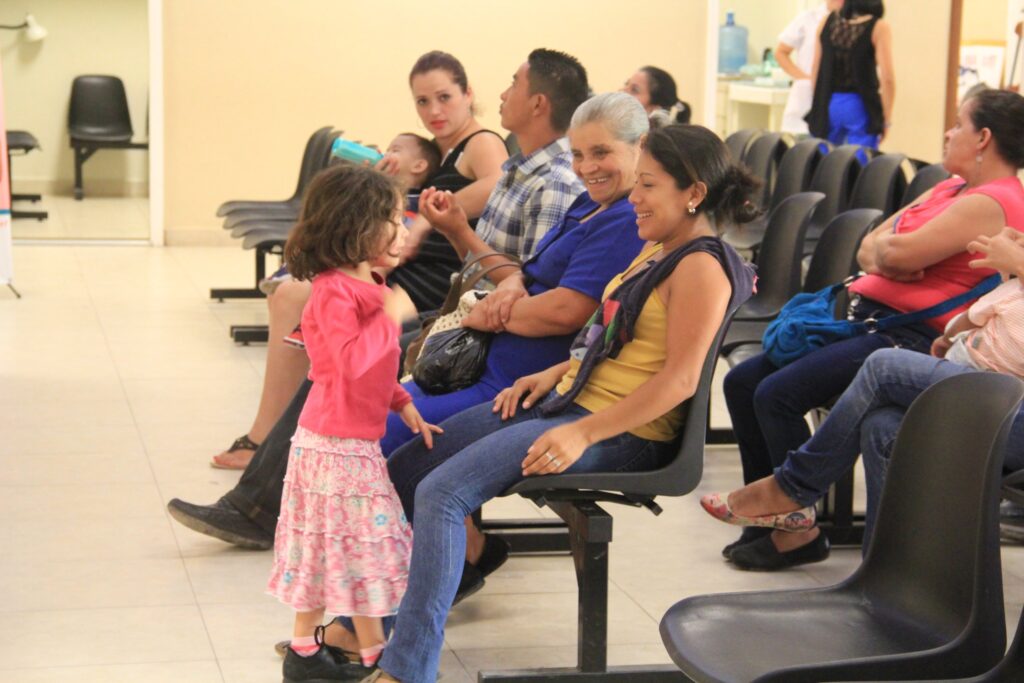
El Policlínico Vicente Fernández Mejía de Santa Rosa de Copán se convirtió en un establecimiento público de salud referente a nivel nacional.
Este centro de salud, que alguna vez enfrentó graves problemas de infraestructura y limitaciones de servicios, se transformó gracias a los esfuerzos de Fundación CAMO Honduras y la generosidad de sus donantes.
Antes del año 2014, el Centro de Salud enfrentaba desafíos estructurales. Las instalaciones, construidas hacía décadas, habían llegado a un estado de deterioro significativo. Los sistemas eléctricos y de agua estaban colapsados, las paredes se agrietaban y el techo de cemento amenazaba con derrumbarse.
“Sufríamos importantes problemas de infraestructura, muchas áreas estaban en mal estado, teníamos espacios pequeños y carecíamos de generador eléctrico”, recordó la doctora Denia Romero, directora del Policlínico Vicente Fernández Mejía.
Durante dos años, CAMO trabajó para renovar y ampliar el centro de salud.
La inversión incluyó la modernización de los sistemas eléctricos, de agua y alcantarillado, la renovación de paredes y techos, y la adición de nuevas instalaciones médicas.
En el año 2016, el Policlínico reabrió sus puertas con una infraestructura completamente renovada y ampliada.
Los cuatro programas de CAMO en ese centro asistencial, es decir, rayos X, mamografía, ultrasonido y tratamiento para cáncer de cérvix, se fortalecieron.
“La ampliación y remodelación vino a convertir al establecimiento en el centro de salud público más grande y más moderno del occidente de Honduras”, señaló la doctora Romero.
La transformación del Policlínico Vicente Fernández Mejía tuvo un impacto profundo y duradero en la comunidad.
Según las autoridades del centro, las atenciones diarias aumentaron de 180 a 700 personas.
“Estamos atendiendo más de 700 usuarios al día, con una de las cadenas de frío referentes a nivel nacional, y hemos ampliado las atenciones pediátricas, psiquiátricas y los programas de cáncer cervical, mamografía, y rayos X”, destacó la doctora Romero.
Hoy en día, el Policlínico cuenta con 22 clínicas y dos salas de capacitación, y provee más de 800 servicios diarios, consolidándose como el segundo centro de salud más grande de Honduras.
“La intervención tuvo un impacto importante, nos llevó a convertirnos en un policlínico a nivel nacional y ahora somos un referente a nivel nacional”, afirmó orgullosa la directora.
El Policlínico Vicente Fernández Mejía no solo mejoró la calidad de vida de los habitantes de Santa Rosa de Copán, sino que también se convirtió en un modelo a seguir para otros establecimientos de salud en Honduras.
The Public Health Center in Santa Rosa de Copán has become a beacon of hope and progress for thousands of people.
This health center, which once faced severe infrastructure problems and service limitations, was transformed thanks to the efforts of CAMO and the generosity of its donors.
Before 2014, the health center faced structural challenges. The facilities, built decades ago, had reached a significant state of disrepair. Electrical and water systems were collapsing, walls were cracking, and the cement roof threatened to collapse.
“We suffered significant infrastructure problems, many areas were in poor condition, we had small spaces, and we lacked an electric generator,” recalled Dr. Denia Romero, director of the Public Health Center.
For two years, CAMO worked to renovate and expand the health center.
The investment included modernizing electrical, water, and sewage systems, renovating walls and roofs, and adding new medical facilities.
In 2016, the Polyclinic reopened its doors with completely renovated and expanded infrastructure.
CAMO’s four programs at the assistance center such as X-ray, mammography, ultrasound, and cervical cancer treatment, were strengthened.
“The expansion and remodeling transformed the establishment into the largest and most modern public health center in western Honduras,” noted Dr. Romero.
The transformation of the Polyclinic had a profound and lasting impact on the community.
According to the center authorities, daily consultations increased from 180 to 700 people.
“We are now serving over 700 users daily, supported by one of the nation’s top cold chain systems. Additionally, we have expanded our pediatric and psychiatric care, as well as our cervical cancer, mammography, and X-ray programs,” emphasized Dr. Romero.
Today, the Polyclinic has 22 clinics and two training rooms, providing more than 800 daily services, making it the second-largest health center in Honduras.
“The intervention had a significant impact, elevating us to a national-level polyclinic. We are now a recognized reference point across the country,” the director proudly stated.
The Public Health Center not only improved the quality of life for the residents of Santa Rosa de Copán but also became a model for other health establishments in Honduras.
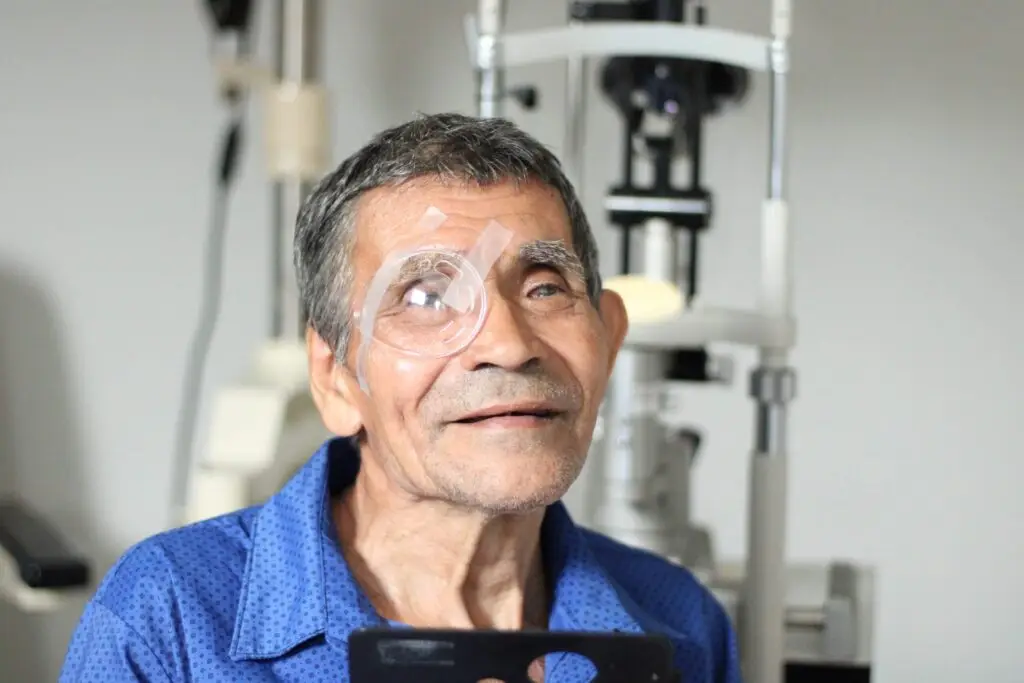
En la comunidad de Piedras Coloradas, Concepción, departamento de Copán, en el occidente de Honduras, vive Andrés Serrano, un adulto mayor que, debido a su ceguera, había quedado atrapado en una vida de penurias.
Residiendo solo en una pequeña vivienda, don Andrés fue diagnosticado con glaucoma absoluto en su ojo izquierdo y catarata en el derecho.
Sin poder ver casi nada, su vida se convirtió en un desafío, especialmente en su movilidad y su capacidad para trabajar.
Durante cuatro años, Andrés dejó de trabajar con el azadón y el machete, herramientas que habían sido su sustento de vida.
La pérdida de visión no sólo le impidió seguir laborando, sino que también lo confinó a su hogar.
“No salí de mi casita todo este tiempo y ha sido triste. Mi fe es que este año voy a volver a cortar café, voy a volver a trabajar”, relató con esperanza.
Con ayuda de dos vecinas, Alba Luz Madrid y Blanca Nohelia Cordón, testigos de sus dificultades, trasladaron a don Andrés al Programa Social de Oftalmología de Fundación CAMO, en colaboración con el Centro Oftalmológico Robles en Santa Rosa de Copán.
Gracias al Programa Social de CAMO, don Andrés recibió la operación que tanto necesitaba.
Tras 24 horas de haber sido operado, don Andrés comenzó a sentir mejoría.
“Siento mucha mejoría y estoy recobrando la visión”, dijo emocionado. La cirugía no solo le devolvió la vista, sino también la esperanza de regresar a su vida de trabajo y valerse por sí mismo.
Andrés Serrano, an elderly man, had been trapped in a life of hardship due to his blindness.
Living alone in a small house, Andrés was diagnosed with absolute glaucoma in his left eye and cataracts in his right.
Unable to see almost anything, his life became a challenge, especially in terms of mobility and his ability to work.
For four years, Andrés stopped working with the machete, a tool that had been his livelihood.
The loss of vision not only prevented him from continuing to work but also confined him to his home.
“I didn’t leave my small house all this time and it’s been sad. My hope is that this year I’m going to go back to picking coffee, I’m going to go back to work,” he said hopefully.
With the help of two neighbors who witnessed his difficulties, Andrés was taken to the CAMO’s Ophthalmology Program, in collaboration with the Robles Ophthalmological Center in Santa Rosa de Copán.
Thanks to CAMO, Andrés received the operation he so desperately needed.
Within 24 hours of the operation, Andrés began to feel improvement.
“I feel much better and I’m regaining my vision,” he said excitedly. The surgery not only restored his sight but also gave him hope to return to his working life and fend for himself.
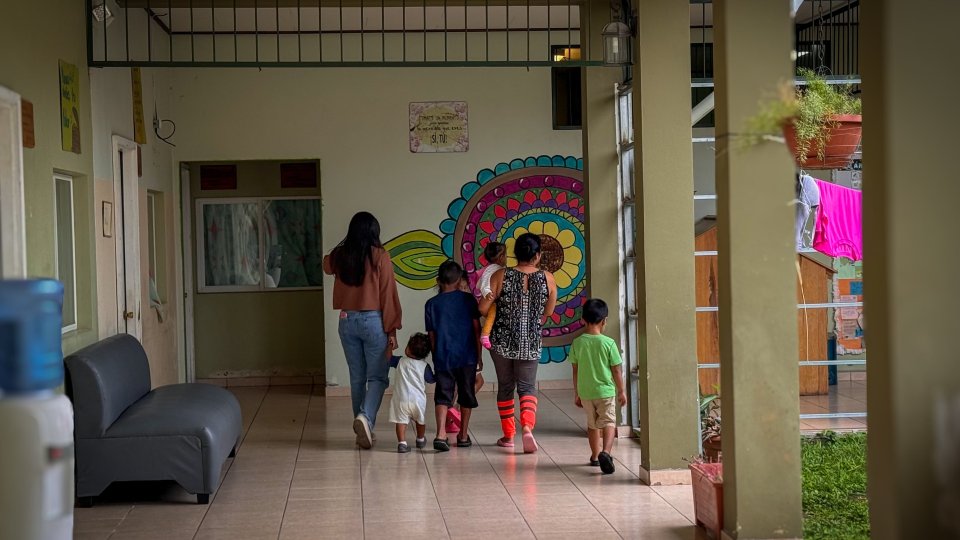
A través de su eje de trabajo de Desarrollo Comunitario, Fundación CAMO Honduras construyó y sigue contribuyendo al funcionamiento de Casa Hogar Santa Rosa, un refugio seguro para mujeres y niños víctimas de violencia doméstica.
Entre 2008 y 2010, Fundación CAMO, con el apoyo económico de CAMO USA, el Congreso Nacional, la municipalidad y la comunidad de Santa Rosa de Copán, edificó este albergue.
Desde entonces, Casa Hogar ofrece programas de intervención integral, brindando alimentación, alojamiento, seguridad, apoyo legal, atención en salud, atención psicológica y formación gratuita a las familias necesitadas.
Casa Hogar es una organización civil, apolítica y sin fines de lucro, que ofrece atención integral, solidaria, empática y confidencial a mujeres y sus hijos e hijas que sufren violencia de género.
Su objetivo es proporcionar un albergue y protección, y en alianza con instituciones como Fundación CAMO, asegurar asistencia integral a las víctimas.
El vínculo entre Casa Hogar y Fundación CAMO se mantiene estrecho, ya que CAMO aporta anualmente un valor económico para el funcionamiento del refugio y forma parte de la Junta Directiva que se encarga de que Casa Hogar continúe siendo un sitio seguro para mujeres y sus hijos.
El último año, unas 114 mujeres y sus hijos fueron asistidos en Casa Hogar, sumando un total de 1,508 personas que han recibido asistencia desde su creación.
Las instalaciones de Casa Hogar cuentan con medidas de seguridad, ofreciendo así a las mujeres y sus hijos una protección integral durante su estadía, la cual varía de acuerdo a cada caso.
Through its Community Development component, CAMO built and continues to support the operation of the Women’s Shelter, a safe haven for women and girls who are victims of domestic violence.
Between 2008 and 2010, CAMO with financial support from donors in the USA, the Honduran National Congress, the municipality, and the community of Santa Rosa de Copán, built this shelter.
Since then, the Women’s Shelter has offered comprehensive intervention programs, providing food, lodging, security, legal support, healthcare, psychological care, and free training to families in need.
The Women’s Shelter is a non-political, non-profit civil organization that offers comprehensive, empathetic, and confidential care to women and their children suffering from gender-based violence.
Its goal is to provide shelter and protection, and in partnership with institutions like CAMO, ensure comprehensive assistance to the victims.
The relationship between the Women’s Shelter and CAMO remains strong, as CAMO annually contributes financially to the shelter’s operations and is part of the Board of Directors that ensures the Women’s Shelter continues to be a safe place for women and their children.
In the past year, about 114 women and their children were assisted at the Women’s Shelter, bringing the total to 1,508 people who have received assistance since its inception.
The facilities of the Women’s Shelter are equipped with security measures, providing women and their children comprehensive protection during their stay, which varies according to each case.
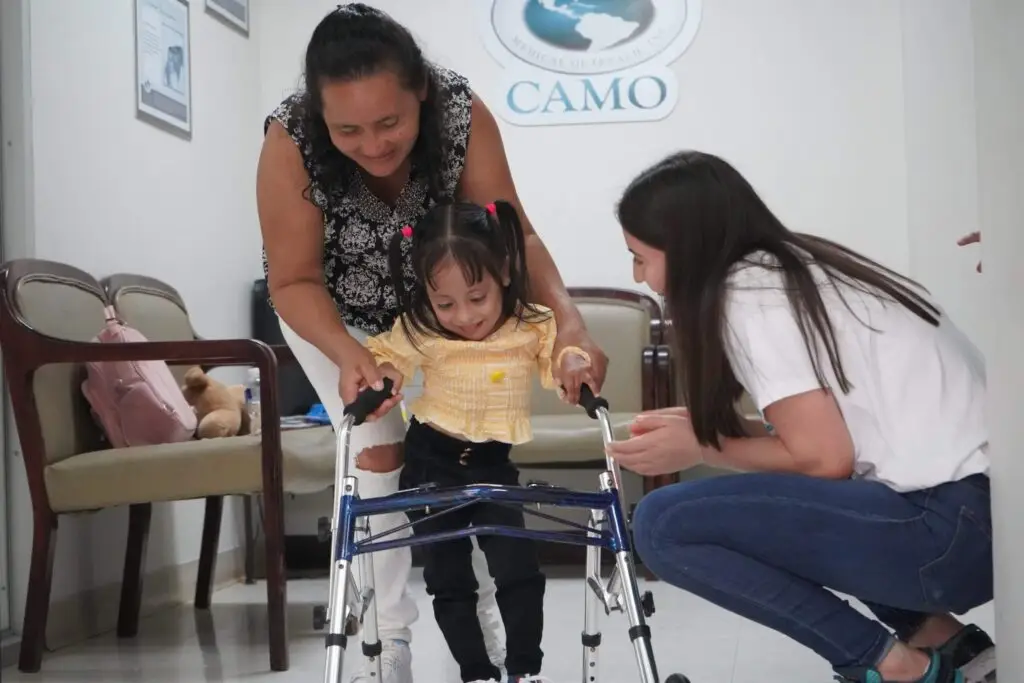
In the rural community of La Estancia, Lepaera, a story of hope and perseverance unfolds with every step Milagro Portillo takes, a 7-year-old girl who has been CAMO’s since she was two months old.
This week, Milagro and her mother, María Portillo, visited the CAMO facilities to share her progress and receive a walker that will improve her mobility.
“It has been difficult, but thanks to God and CAMO, we have moved forward,” commented María.
Since the little girl was two months old, she has been under the care of Dr. Roberto Álvarez, CAMO’s counterpart for the Neurosurgery Program.
The journey has been arduous, but full of small and great achievements that have marked the lives of Milagro and her family.
Milagro was born premature and with hydrocephalus, a condition that required surgeries on her head.
“Thanks to CAMO, we see a future full of possibilities for my daughter,” said María Matías, a grateful mother.
“Milagro began to stand up three days ago. This is a great achievement for me, and I wanted to come and share it with the CAMO staff, who are like a second family to us,” María shared with a smile full of pride and joy.
Seeing her daughter stand on her own for the first time is a significant milestone in her recovery and development.
Despite the challenges, Milagro is a cheerful and intelligent girl.
Additionally, she was referred to the Ophthalmology Program thanks to the collaboration with the Robles Ophthalmological Center, which will further improve her quality of life.